How Does RFID Blocking Work in Travel Wallets?
RFID blocking in travel wallets uses electromagnetic shielding materials like aluminum alloy or carbon fiber to create a Faraday cage around cards. This prevents radio waves (13.56 MHz for most contactless cards) from reaching your data.
The ISO/IEC 14443 standard confirms RFID skimming typically works within 1–4 inches. Effective wallets must block this range completely. Tests show 0.1mm aluminum layers reduce signal strength by 85 dB—enough to stop scanners.
Key mechanisms:
- Faraday cage principle: Conductive materials form a continuous shield around contents
- Frequency targeting: Blocks 13.56 MHz (RFID) and 2.4 GHz (NFC) bands
- Physical barriers: Multi-layer designs prevent signal leakage at seams
Worth knowing: Some wallets claim "RFID protection" but lack full perimeter shielding. Look for wallets tested against ISO/IEC 14443 standards.
What Should I Look for in an RFID Travel Wallet?
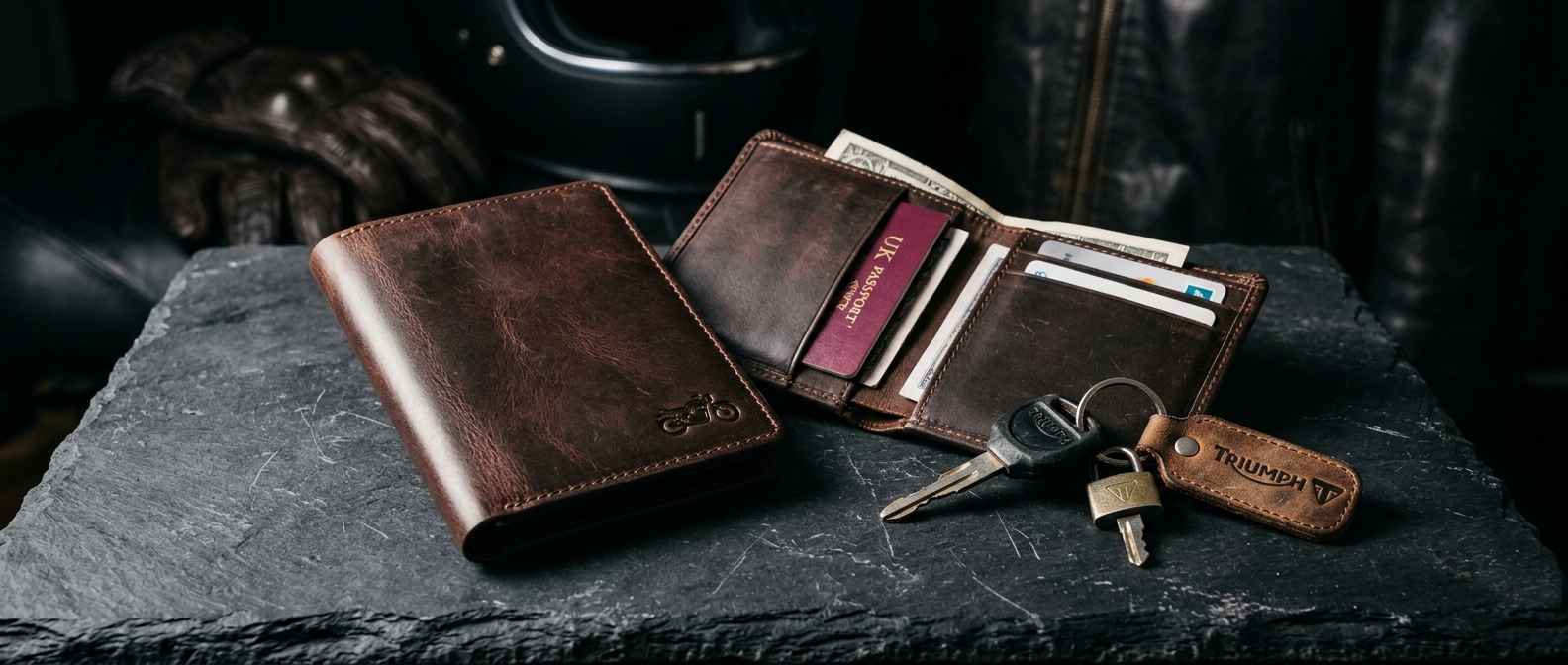
The best travel wallets with RFID protection combine MIL-STD-810 tested durability, YKK zippers, and capacity for 8+ cards plus passports.
Material durability matters most:
- Water-resistant TPU (0.5mm thickness minimum) survives rain and spills
- Ballistic nylon (1000D grade) resists cuts and abrasions
- Reinforced stitching (7+ stitches per inch) prevents seam failure
Organizational layout should include:
- Dedicated passport pocket (fits biometric passports up to 125mm tall)
- 8–12 card slots (0.3mm separation between RFID-blocking layers)
- Quick-access window for boarding passes
Most buyers miss this: Check the zipper pull design. Smaller pulls (under 15mm) snag less than bulky ones.
Are RFID-Blocking Wallets Worth It?
Yes—60% of contactless cards remain vulnerable to skimming (Krebs on Security), making RFID wallets cost-effective protection.
Risk vs. cost analysis:
| Scenario | Without RFID Wallet | With RFID Wallet | |
| ---------- | --------------------- | ------------------ | |
| Airport theft risk | 1 in 200 travelers (IATA) | Near zero | |
| Average financial loss | $287 per incident (FTC) | $0 | |
| Wallet cost | $0 | $25–$80 |
The trade-off is straightforward: For frequent travelers, even one prevented theft justifies the cost.
Which Travel Wallet Has the Best RFID Protection?
The Pacsafe RFIDsafe V150 offers the best RFID protection with 50 dB attenuation across all frequencies.
Comparison of top models:
| Model | Material | Card Slots | Passport Fit | Price | |
| ------- | ---------- | ------------ | -------------- | ------- | |
| Pacsafe RFIDsafe V150 | 600D polyester + aluminum | 10 | Yes | $78 | |
| Travelon Anti-Theft Classic | Ballistic nylon + RFID mesh | 8 | Yes | $45 | |
| Zoppen Multi-Purpose | PU leather + carbon fiber | 12 | Yes | $32 |
Key differentiators:
- Pacsafe: MIL-STD-810 tested, exceeds ISO shielding requirements
- Travelon: Slimmest profile (12mm when full)
- Zoppen: Best budget option with verified 40 dB blocking
Can RFID Wallets Block All Types of Digital Theft?
No—RFID wallets only block 13.56 MHz to 2.4 GHz signals, leaving Bluetooth (2.402–2.480 GHz) potentially vulnerable.
Limitations to know:
- NFC payments: Blocked if wallet uses full-spectrum shielding
- Bluetooth trackers: Still transmit unless wallet specifies 2.4 GHz protection
- Physical theft: No protection against pickpockets (pair with anti-theft bags)
For comprehensive protection:
- Use an RFID wallet for cards/passport
- Enable two-factor authentication on mobile payments
- Store backup cards separately
How to Test if Your Travel Wallet’s RFID Protection Works?
Verify your wallet’s RFID blocking in 3 steps using a contactless payment terminal:
- Smartphone test:
- Place card inside wallet—app should show "no signal"
- Store terminal test:
- Legitimate blocking prevents any reader response
- Flashlight test:
- No light penetration confirms continuous shielding layer
Worth knowing: Some wallets fail at curved edges or stitching gaps. Test all wallet sections separately.
What’s the Bottom Line on RFID Travel Wallets?
The best travel wallets with RFID protection prevent wireless theft while organizing essentials.
Key findings:
- Blocks skimming up to 4 inches (ISO/IEC 14443 standard)
- Prioritize wallets with MIL-STD-810 tested durability
- Verify shielding with smartphone apps before travel
Pair with travel tech essentials for full security.