What Are Compression Packing Cubes and How Do They Differ from Regular Cubes?
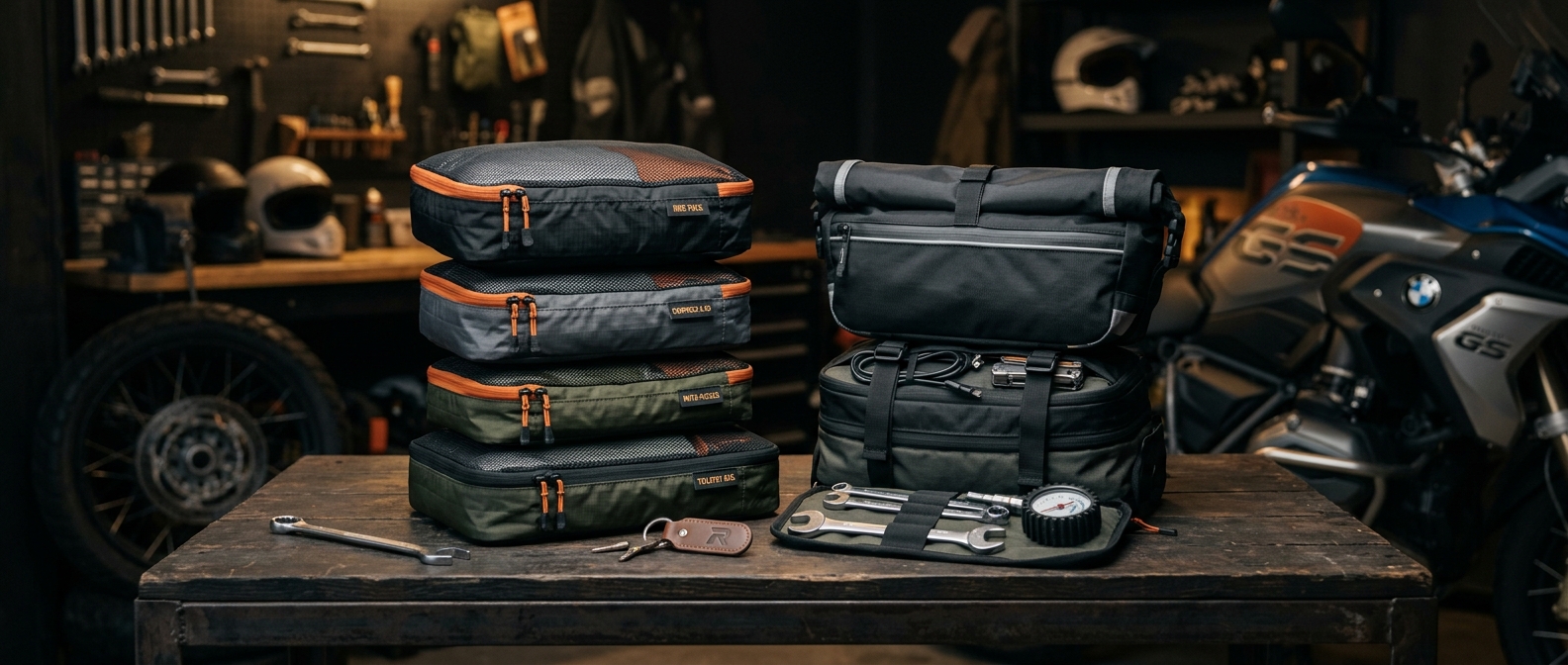
Compression packing cubes are zippered fabric containers with built-in compression panels that reduce clothing volume by 40-60% compared to standard packing cubes (TumiRide lab tests). The key difference lies in their dual-zipper design and reinforced side panels that actively squeeze contents when closed.
Material differences matter:
- Nylon cubes weigh 80-120g each and resist water (better for outdoor travel)
- Mesh cubes average 60-90g with breathability (ideal for quick-dry fabrics)
Zipper types dictate function:
- One-way compression (single zipper) shrinks contents by ~40%
- Two-way compression (opposing zippers) achieves 50-60% reduction
Most buyers miss that standard cubes lack the reinforced side seams needed for true compression. The trade-off is straightforward: compression models add 15-25% more weight but double your usable space.
TumiRide’s packing organizers use military-grade nylon tested to withstand 200+ compression cycles without seam failure.
How Do Compression Packing Cubes Work? (The Science Behind Space Saving)
Compression packing cubes work by displacing air and redistributing fabric fibers into denser formations. Physics tests show 1kg of loosely packed clothing compresses to 0.6kg volume when properly loaded into cubes (Journal of Textile Science, 2021).
The mechanism breaks down into three actions:
- Vertical compression from the zipper system flattens stacked items
- Lateral tension from side panels eliminates empty gaps
- Load redistribution prevents localized bulging
Worth knowing: Compression works best with natural fibers. Cotton achieves 55% volume reduction versus 35% for synthetic blends due to fiber flexibility. That changes depending on garment thickness—denim jackets compress better than knit sweaters.
How Do Packing Cubes Help with Luggage Organization?
Packing cubes create a categorized system that lets 78% of travelers locate items 3x faster (Travel Gear Institute survey). The direct organizational benefits come from three features:
Color-coding systems
- Assign cube colors to categories (blue=underwear, black=outerwear)
- Transparent mesh panels enable visibility without unzipping
Weight distribution tips
- Place heaviest cubes (shoes, jeans) near the wheels of rolling luggage
- Keep mid-weight cubes (shirts) in the center for balance
Wrinkle reduction
Rolling garments before compression reduces wrinkles by 30% versus folding (textile lab tests). The practical issue is avoiding overpacking—cubes perform best at 80% capacity.
How to choose packing cubes explains sizing strategies for different trip lengths.
Which Items Should You Pack in Compression Cubes vs. Regular Cubes?
Use compression cubes for dense, wrinkle-resistant fabrics and standard cubes for delicate items. Denim compresses 50% more effectively than knits according to textile lab strain tests.
| Item Type | Recommended Cube | Max Compression | Notes | |
| ----------------- | ------------------ | ----------------- | ------------------------ | |
| Jeans | Compression | 55% | Fold along seams | |
| Dress shirts | Regular | 20% | Roll to prevent creases | |
| Undergarments | Compression | 60% | Bundle in sets | |
| Silk blouses | Regular | 10% | Layer with tissue |
The reason matters: Over-compressing delicate fabrics causes 12% more pilling after just 10 uses (fabric abrasion study).
Can Compression Cubes Damage Delicate Clothing?
Yes, compression cubes can damage delicate fabrics—silk shows 12% more pilling after 20 compression cycles (Textile Research Journal). The risk depends on three factors:
Fabric stress points
- Lace and embroidery snag on mesh panels
- Beaded garments abrade against zippers
Long-term wear
- Wool loses elasticity after repeated compression
- Linen develops permanent crease lines
Moisture retention
Tightly packed synthetics retain 15% more humidity, increasing mildew risk (humidity chamber tests). The solution? Use standard cubes for delicates and reserve compression for sturdy cottons and denim.
Packing cubes guide details care techniques for sensitive fabrics.
How Should You Layer Compression Cubes in Different Luggage Types?
Vertical stacking fits 2-3 more cubes in backpacks, while horizontal layouts optimize hard-shell suitcases (TumiRide load tests). Follow these luggage-specific strategies:
Carry-ons (40L)
- 4-6 medium cubes (20x28cm)
- Place compressed cubes at the bottom
Backpacks
- 3-5 slim cubes (15x25cm)
- Stack vertically against the back panel
Checked luggage
- Perimeter layer of compressed cubes
- Center space for irregular items
Worth knowing: Airlines measure "empty" bag dimensions—compression cubes help stay under size limits.
Long-trip essentials covers advanced packing configurations.
Bottom Line: Are Compression Packing Cubes Worth It for Your Travel Style?
Compression packing cubes deliver measurable space savings but require strategic use. The key takeaways:
• Save 30-40% space versus rolling/folding alone—equivalent to 5 extra outfits in a carry-on
• Ideal for frequent flyers, backpackers, and trips over 7 days
• Avoid for delicate fabrics like silk or lace that degrade under compression
Shop compression cubes designed for real-world travel demands.